LA and Long Beach Ports Each Get $70 Million for Upgrades
The Port of Los Angeles and Port of Long Beach each secured $70 million in federal funding for dredging, seismic retrofits, and wharf repairs.
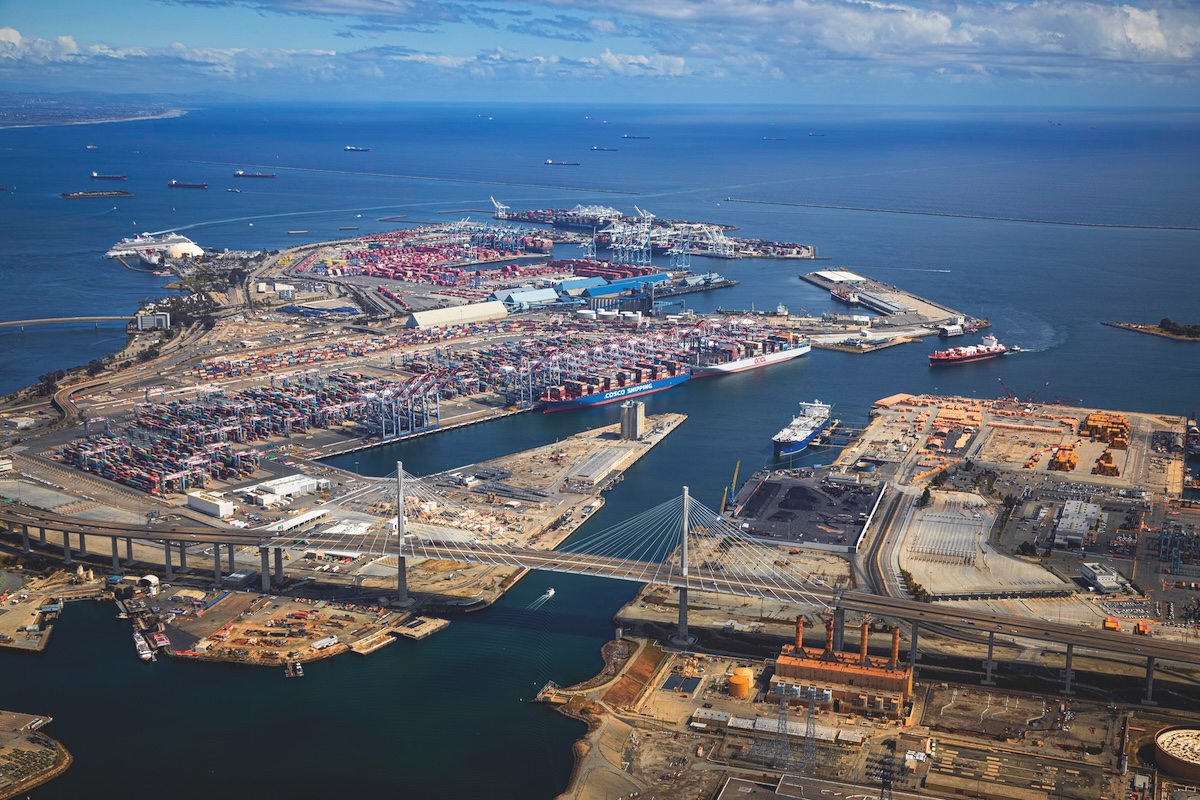
The ports of Los Angeles and Long Beach each landed roughly $70 million in federal infrastructure money, funding that’ll go toward dredging, seismic retrofits, and wharf repairs at two cargo complexes that keep American supply chains moving.
Both allocations came from the Harbor Maintenance Trust Fund, distributed by the U.S. Army Corps of Engineers. That’s not a small program. Ports across the country compete for those dollars, and the fact that Los Angeles and Long Beach each pulled $70 million reflects a formula change that took years to push through Congress.
Here’s why that formula change matters. Under the old distribution rules, Los Angeles and a cluster of other high-volume facilities were categorized as “donor ports.” Together they generated more than 50% of the fund’s total receipts through a commercial cargo tax paid by U.S.-based importers. Despite that contribution, those same ports sometimes got back as little as 3% of the fund for their own infrastructure needs. The Reforms to the distribution structure corrected that imbalance. The $70 million figure at each port is what the recalibrated math now produces.
The gap between what the ports put into the fund and what they got back wasn’t a clerical error. It was structural, and it meant deferred maintenance compounded for years while the ports kept generating fees that flowed elsewhere.
At the Port of Los Angeles, the money has specific assignments. Project managers have earmarked funds for dredging and sediment removal, pile replacements, and improvements to slips and channels throughout the complex. Specific work includes wharf and fender repairs at Berths 49 and 50, seismic upgrades at Berth 126, and marine oil terminal work at Berths 167 through 169. Those aren’t cosmetic projects. Seismic retrofits and fender replacements are the kind of maintenance that determines whether a berth stays in service or gets taken offline.
The backlog is substantial.
Executive Director Gene Seroka said the scope of what’s still needed dwarfs the current allocation. “Right now, the port is looking at more than $6 billion in future navigational maintenance and repair projects,” Seroka said. “With this support, repairs can move forward more quickly, ensuring that our Port’s infrastructure continues to meet world-class expectations.”
That $6 billion number isn’t hypothetical. The LA Business Journal has covered the port’s long-term infrastructure gap, and the Corps of Engineers maintains navigation channels nationally against a backlog that only grows as container ships get larger. A vessel that can’t reach a berth because of sediment accumulation doesn’t wait around. It reroutes. Over time, rerouted cargo can mean lost contracts to Gulf Coast or East Coast competitors, and that’s a loss that doesn’t show up on one shipping manifest — it shows up in freight volumes a decade later.
By 2050, projections from port planners suggest vessel sizes and cargo volumes will strain infrastructure that’s already running behind on maintenance. That timeline is the context behind repair timelines being pushed forward now rather than deferred again.
At Long Beach, the $70 million covers maintenance dredging and replacement of the Back Channel steel bulkhead, a structure central to safe vessel movement through that port’s complex. Dredging keeps channel depths current as sediment accumulates and as vessel drafts increase with newer, larger ships entering service.
The twin ports together handle a dominant share of American imports. Cargo moves out of San Pedro through distribution networks that stretch into the Inland Empire, feeding warehouses and freight corridors that employ tens of thousands of people across Southern California. When berths go out of service or channels shallow up, the slowdown isn’t contained to the dock. It ripples through logistics chains that extend hundreds of miles inland.
The Federal Emergency Management Agency has separate programs for port resilience tied to disaster preparedness, but the Harbor Maintenance Trust Fund allocations are specifically about keeping existing infrastructure functional, not rebuilding after events. These dollars are maintenance, and maintenance is what prevents the larger, more expensive failures.
For the Port of Los Angeles, the projects at Berths 126, 167, 169, 49, and 50 represent work that was already in the queue. The funding means it moves from the list to the schedule.