LA and Long Beach Ports Each Get $70 Million for Upgrades
The Port of Los Angeles and Port of Long Beach each secured $70 million in federal funding for dredging, seismic retrofits, and wharf repairs.
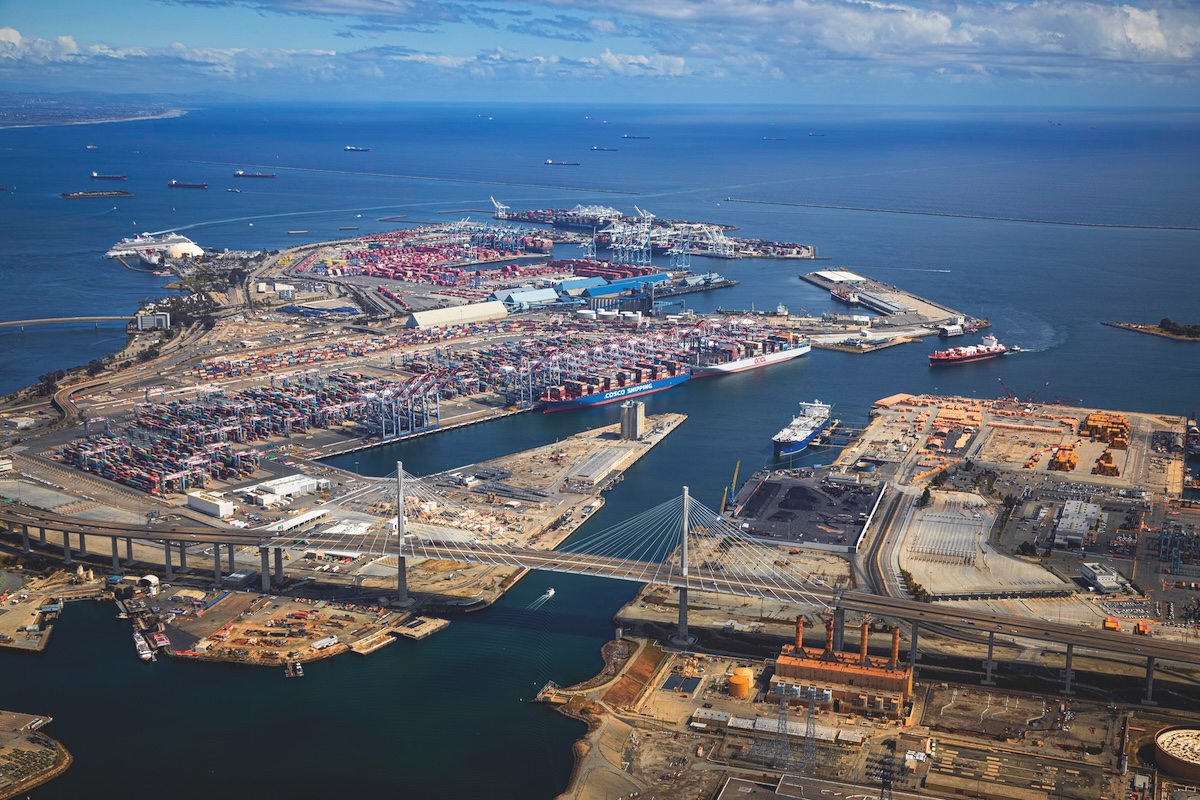
The Port of Los Angeles and the Port of Long Beach each secured roughly $70 million in federal infrastructure funding this year, money that will pay for dredging, seismic retrofits, and wharf repairs at two of the country’s busiest cargo hubs.
The cash comes from the national Harbor Maintenance Trust Fund, distributed through a program run by the U.S. Army Corps of Engineers. For anyone who moves goods through Southern California, the numbers matter: the twin ports together handle a staggering share of American imports, and crumbling berths or silted channels slow everything down, from container ships to the warehouse jobs that stretch from San Pedro to the Inland Empire.
The funding amounts are significantly larger than what the ports received in many earlier cycles, and that gap is intentional. Reforms to the Harbor Maintenance Trust Fund’s distribution formula changed how money flows back to the ports that generate it. Under the old math, the Port of Los Angeles and a small group of other high-volume facilities were classified as “donor ports” because they collectively contributed more than 50% of the fund’s receipts through a commercial cargo tax paid by U.S.-based importers. Despite that outsized contribution, those same ports sometimes got back as little as 3% of the fund for their own infrastructure work. The reform corrected that imbalance, and the $70 million figure at each port reflects the recalibrated formula.
At the Port of Los Angeles, project managers plan to put the money toward dredging, sediment removal and remediation, pile replacements, and improvements to slips and channels. Specific work includes wharf and fender repairs at Berths 49-50, seismic upgrades at Berth 126, and marine oil terminal improvements at Berths 167-169. The scope points to deferred maintenance that has accumulated over years of underfunding.
The backlog is substantial.
“Right now, the port is looking at more than $6 billion in future navigational maintenance and repair projects,” Executive Director Gene Seroka said. “With this support, repairs can move forward more quickly, ensuring that our Port’s infrastructure continues to meet world-class expectations.”
That $6 billion figure isn’t an abstraction. The U.S. Army Corps of Engineers maintains navigation channels throughout the country, and port authorities depend on that partnership to keep draft depths current as container ships get bigger every decade. A vessel that can’t reach a berth because of sediment buildup doesn’t just inconvenience a shipping line. It reroutes cargo, which can shift long-term contracts to competing ports on the Gulf Coast or East Coast.
At the Port of Long Beach, the $70 million will support maintenance dredging and replacement of the Back Channel steel bulkhead, a piece of infrastructure that’s central to safe vessel movement through the port complex. The funds will also cover fender, bollard, and berthing system upgrades alongside seismic retrofits and wharf repairs.
Don’t underestimate the seismic piece. Both ports sit in earthquake country, and aging marine infrastructure built before modern codes can fail under stress that newer construction handles without incident. The Federal Emergency Management Agency has long flagged port seismic vulnerability as a supply chain risk, and the investment at both facilities addresses that exposure directly.
Noel Hacegaba, the port’s new chief executive, framed the money inside a longer ambition. “The Port of Long Beach is a leading gateway contributing to the U.S. economy, and this funding will help us keep commerce flowing safely and efficiently as we build the port of the future and double our cargo throughput to 20 million container units annually by 2050,” Hacegaba told LA Business Journal.
Twenty million container units.
That target, if achieved, would represent a dramatic expansion of the port’s current capacity, and it explains why the Long Beach team views today’s maintenance spending as foundational rather than routine. You don’t double throughput on infrastructure that wasn’t maintained.
The broader context here touches every business that depends on Pacific trade lanes. The Harbor Maintenance Trust Fund, fed by that commercial cargo tax on importers, was designed to create a dedicated revenue stream for exactly this kind of work. The problem was the formula kept the money at a federal level rather than returning it to the ports generating the revenue. The reform changed that calculus, and Southern California’s two dominant trade gateways are now seeing the direct benefit in capital project budgets that can actually move work forward.