Burbank Airport Near-Miss Prompts FAA Helicopter Restrictions
A near-miss between NBC4's Newschopper4 and a cargo plane near Burbank Airport has led the FAA to impose new helicopter flight restrictions on congested airspace.
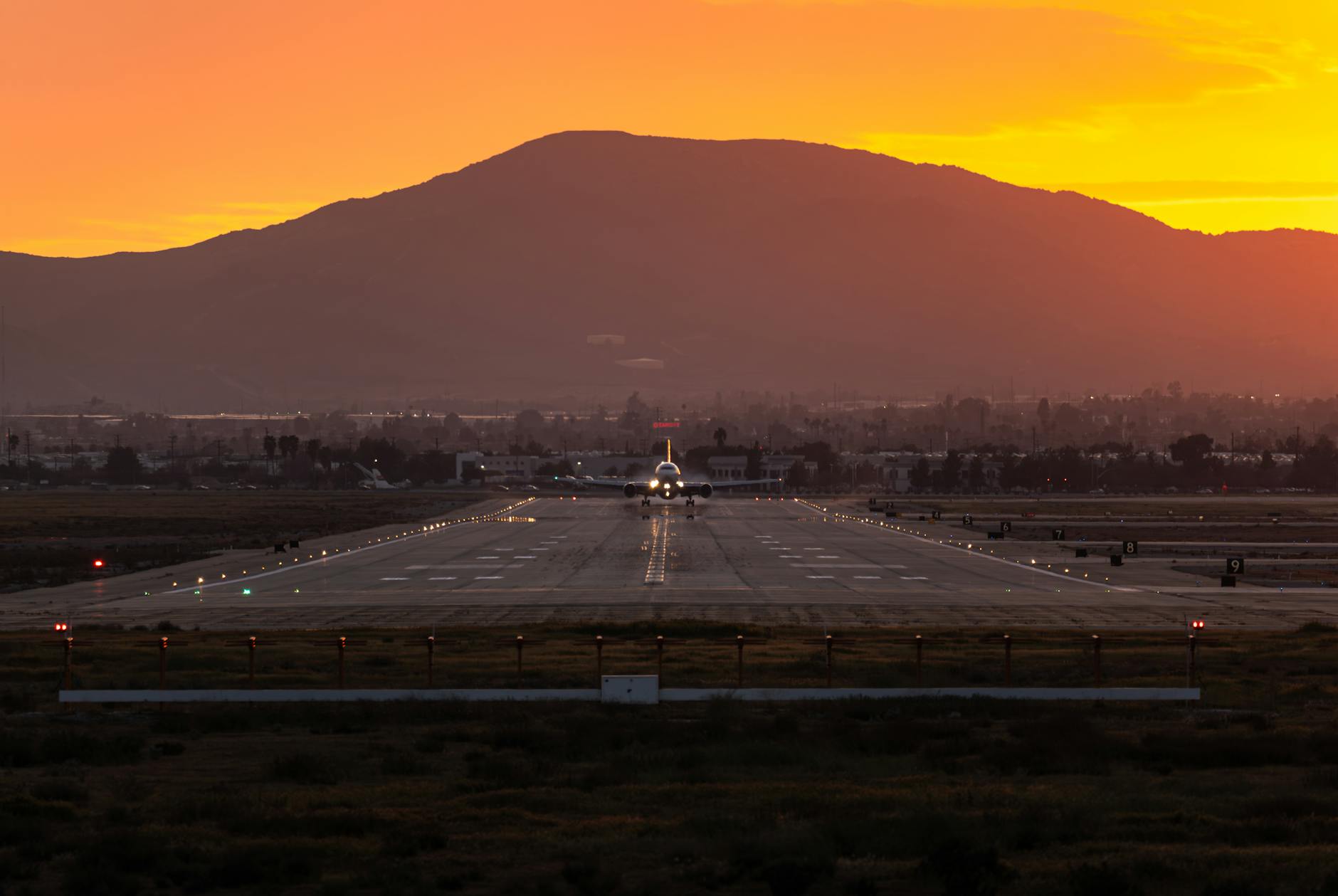
The Federal Aviation Administration has tied a near-miss incident involving a Los Angeles news helicopter to a new set of restrictions on helicopter flights through congested airport airspace, with Hollywood Burbank Airport named specifically in the rule change.
The incident happened on March 2. The pilot of Newschopper4, which operates under contract for NBC Los Angeles through Angel City Air, was flying north above the 5 Freeway when air traffic controllers cleared a turboprop cargo plane to land on Burbank’s runway 15. The approaching plane made a sweeping left turn to cross the freeway southbound, putting it on a converging path with the helicopter.
The Newschopper4 pilot turned right to avoid a conflict. Air traffic data and recorded communications confirm that the helicopter’s northbound route above the freeway had been approved by controllers before the cargo plane was cleared to land.
After the maneuver, the pilot radioed Burbank tower directly. “Hey Burbank, if I didn’t turn right, I would have met that incoming airplane for I-5,” the pilot said in the recorded transmission.
The pilot subsequently filed a report with the FAA.
Larry Welk, whose company Angel City Air operates NBC4’s helicopter fleet, pushed back against characterizations of the event as a near-disaster. “There was never an imminent danger,” Welk said. He credited the pilot’s situational awareness for keeping the situation from escalating. “(The pilot) elected to do a maneuver that would not interfere with the path of the airplane. He also informed the tower, ‘Hey, I see this airplane,’” Welk said. “Had he not made a move, something bad could have happened.”
The FAA cited this incident on March 18 when it posted a temporary rule change requiring air traffic controllers to actively track helicopters on radar when those aircraft are permitted to fly through the airspace of busier airports. Hollywood Burbank Airport is among the facilities covered by the new requirement.
The change carries practical consequences for Burbank airspace. Controllers will now carry a heavier tracking workload for any helicopter given permission to transit through the corridor, which could effectively reduce helicopter access through certain routes. News helicopters, medical transport operators, and other rotorcraft that routinely use the airspace above the I-5 and SR-134 corridors could find their operations affected.
The new rule arrives against a backdrop of growing federal attention to mid-air collision risk in Southern California. National Transportation Safety Board Chair Jennifer Homendy had previously identified the airspace around Hollywood Burbank Airport as one of her top safety concerns, a notable statement given the number of high-risk corridors the NTSB monitors nationally. The NTSB issued a formal warning about mid-air collision risks at the airport in January 2026.
Burbank sits at a complicated intersection of flight paths. Hollywood Burbank Airport handles commercial traffic, private aircraft, and cargo operations, while the surrounding airspace over Glendale, the I-5 corridor, and the foothills funnels a constant stream of helicopters working news coverage, construction observation, law enforcement, and medical transport. The airport operates under Class C airspace rules, which require communication with controllers but allow significant helicopter traffic under visual flight conditions.
The FAA has described the March 2 event as a “conflict” between the unidentified helicopter and the cargo plane, a technical designation that signals controllers or pilots had to take action to resolve a spacing problem. The agency offered limited additional detail in its March 18 posting beyond citing the incident as a basis for the rule change.
Whether the temporary rule becomes permanent will likely depend on how controllers manage the added workload and whether the restrictions produce measurable safety improvements. If the tracking requirement proves burdensome at airports like Burbank, where helicopter traffic is dense and time-sensitive, operators may push back through the rulemaking process.
For now, anyone whose work puts them in the air above the freeway corridors north of downtown Los Angeles is operating under tighter rules than they were last month, and the radio call from a news helicopter pilot on a March afternoon is the reason why.